
Hinge Adjustment for a Door’s Final Fit
Easy adjustments to screws, mortises, and hinges on interior doors contribute to a perfect fit.
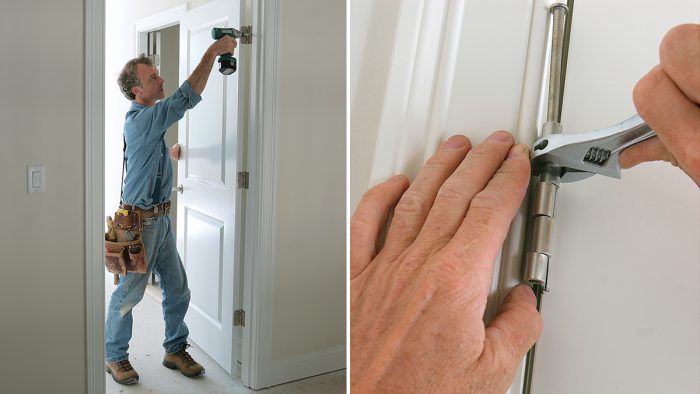
For finish carpenters, fine-tuning the fit of a new interior door offers plenty of bang for the buck. For little effort, there’s a lot of gratification. The final fit mostly involves door-hinge adjustment after the painters have finished.
First, I check that the door is swinging properly on its hinges. If the hinge leaf fastened to the door is not set fully in the mortise because of paint, plaster, tape, or misalignment, the hinges will bind. This might cause the door to creak or to spring back from a closed position. If the mortise in the jamb is set too close to the stop the door will bind against the stop. If this is the case, you will probably see telltale signs of scraped paint on the door where it rubs.
When adjusting hinges, I often have to adjust the location of screw holes. Rather than struggle with a hole in the wrong spot, I simply tap in a plug and drill the hole where I want it.
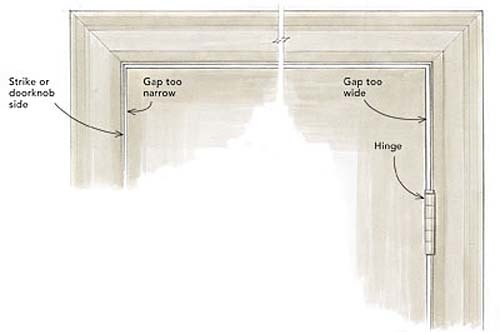
After I get the door swinging properly, I adjust the hinges so that there is a consistent gap between the door and the jamb. When making corrections to the gap or any adjustments to the door, I make incremental changes. Often, going forward by small degrees is easier than going back by any amount.
Secure the door to the framing
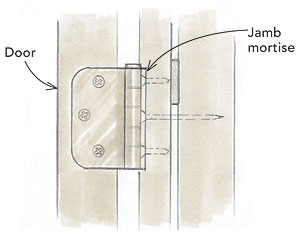
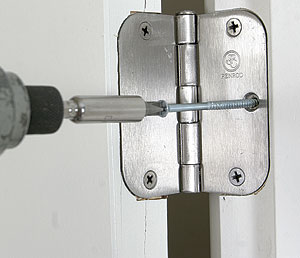
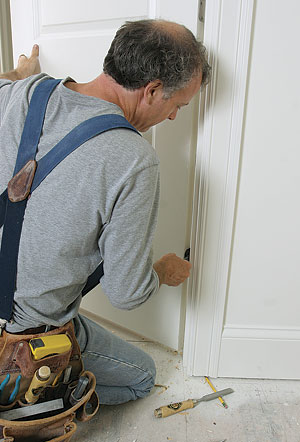
Secure the door with a long screw. Sometimes a door sags away from the hinge-side framing. To prevent this, I replace the short center screw of the top hinge with a 3-in. screw driven into the framing. Sinking this screw often changes the gap at the top and the opposite side of the door.
 |
 |
A proud hinge might creak or bind
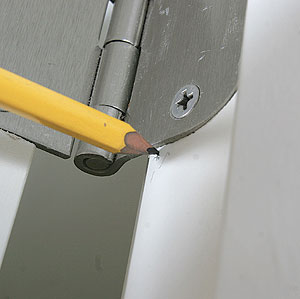
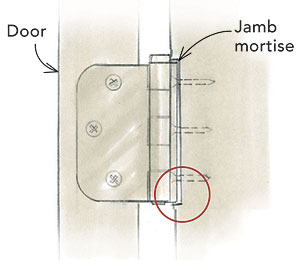
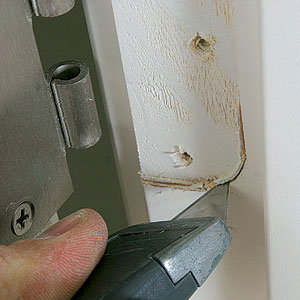
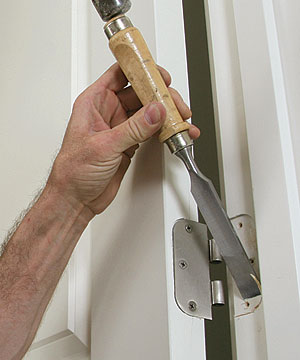
Fine-tune the mortise for a good fit. A hinge leaf that stands proud of the face of the jamb can prevent a door from operating properly. Remove the screws to reveal the mortise. If the hinge leaf and the mortise were not aligned so that the hinge leaf was fully seated in the mortise when the screws were driven, there will be a compression mark from the hinge. With a utility knife, carefully cut along this line to expand the mortise. Use a sharp chisel to remove the wood waste and clear any paint, tape, or wood debris that might keep the hinge from seating fully in the mortise; then reattach the hinge.
 |
 |
 |
 |
Get the screw holes aligned correctly
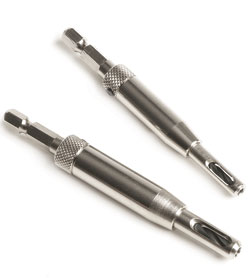
Photos: John Tetreault (top), Charlie Reina (bottom)
Centering a drill bit in a hinge hole without a self-centering bit is not impossible—but it’s not easy, and even a small error will move the hinge out of place, or make it difficult to seat the screw head completely. Self-centering bits eliminate this problem. The bit’s shank is chucked in a drill. The cutting end of the bit is encased in a sleeve with a beveled tip that centers it in the hinge hole. As the bit is pressed to the wood, the spring-loaded sleeve retracts, allowing the hole to be bored right where it should be. Self-centering bits come in sizes to fit cabinet and full-size door hinges. You can buy them at home centers or online for less than $15.
Adjust the gap by bending the hinges
Open the hinge-side gap by spreading the hinges. I’ve seen shims used behind the hinge leaf to adjust the gap, but bending the hinge takes less time. I can widen the gap in small increments. Remember that when the gap is adjusted on one side, it affects the gap on the other side as well. Place the butt end of a nailset between the hinge leaves up against the pin eyelet, or hinge knuckle. When the door is pulled toward the closed position, the nailset spreads the leaves and widens the gap. This technique puts a lot of force on the hinge, so go slowly to avoid damaging the hinge or bending it too far.
 |
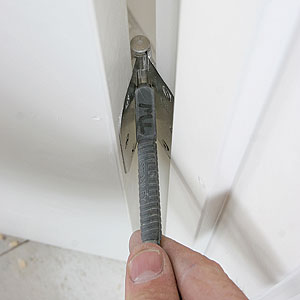 |
Close the hinge-side gap by bending the knuckles. Set an open-ended adjustable wrench, also called a Crescent wrench, just larger than the hinge knuckle. Remove the hinge pin, and bend the door-side knuckles toward the door handle. This will close the gap. Go slowly. A difference of 1/16 in. is easy to notice.
 |
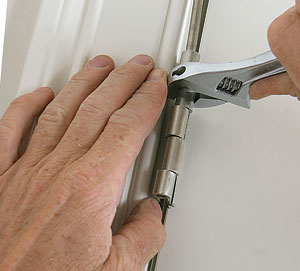 |
A binding hinge might require wood plugs
Correct offset screw holes. Sometimes, the mortise is in the right place, but the hinge wasn’t set properly. This can cause binding or gaps along the doorstop molding. In this case, resetting the screws to move the door away from the stop will allow the door to close completely without binding. In order to do that, plug the existing screw holes and drill new ones with the help of a self-centering bit.
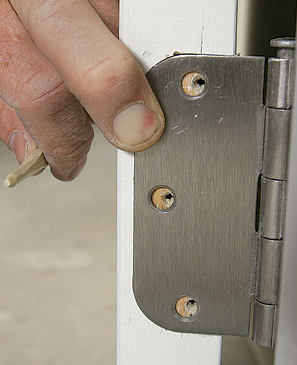
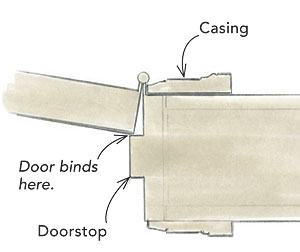 |
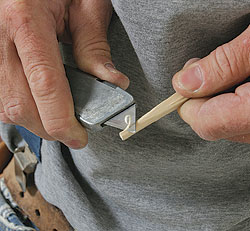 |
To adjust the screw-hole locations, I whittle plugs from poplar. Poplar is a common hardwood for paint-grade trim material that will give threads a good bite. Size the plug to fit snugly with a few hammer taps. Don’t overdrive the plug or you may crack the door.
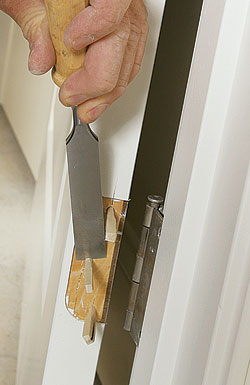
Trim the plugs flush with a chisel. There is no need for glue. Friction holds the plugs in place when I drill new screw holes in the correct locations.
Photos by John Ross, except where noted. Drawings by Dan Thornton.
More about doors:
A New Door Fits an Old Jamb – Are your doors looking tired? Replace them quickly and easily with a technique that works every time.
How to Cut a Prehung Exterior Door to a Custom Height – You don’t have to order an expensive custom door if your rough opening is a non-standard size. Buy a stock door instead and make it fit. Watch this video by carpenter and former senior editor Andy Engel to learn how to cut a prehung exterior door.
Jigs for jambs (and other door-hanging advice) – Inventor and finish carpenter Jim Chestnut has hung his share of doors, and he has learned to depend on a variety of measuring and cutting jigs for jambs to make door-hanging quicker and easier. He uses one jig made from 5/4×6 stock to measure jamb legs.
Video Vault: Fine-Tuning Hinges – Whether the door is new or old, Tucker Windover’s technique produces a perfectly aligned door that closes properly and stays shut.

View Comments
For dealing with offset screws and reamed out holes, I carry some 3/16 dowel and a 5/32 bit- they give me a force fit, but I've never split a jamb with them, even in cabinets. On a good day, you can even drill through to the rough jamb and drive the dowel through the finish jamb into the underlying 2x4. It helps to chamfer the end of the dowel.